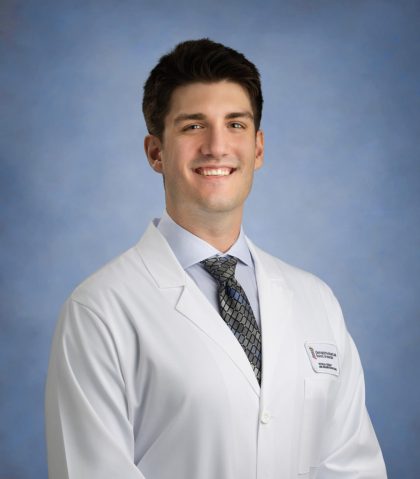
Dr. Kopsidas is just beginning his journey in this field. Throughout his life, he’s always felt the desire to help his family and friends, and feels that each of his patients becomes just as close. He wishes to give back control to his patients, to be a resource for them and to address the root cause of any dysfunction. He is skilled in manual therapy techniques, therapeutic exercises, and patient education. He strives to stay on top of present research and always give his full attention/effort to improving his patients’ lives and function.
Position Physical Therapist
Education Doctor of Physical Therapy
Professional Background
Dr. Logan Kopsidas earned his bachelor in Exercise Science at Towson University and obtained his Doctorate in Physical Therapy from the University of Maryland School of Medicine. His interest in becoming a physical therapist originated from his own experience with physical therapy and his desire to become the health care provider he wished he had while growing up. He strives to take a very hands-on and holistic approach to physical therapy while consistently improving his unique functional manual skills and knowledge. His dream is to become the physical therapist that can start the momentum for his patients healthcare journey so that they can return to function and improve their quality of life.
Areas of Focus
Manual therapy that is patient specific with functional techniques combined with traditional manual style.
Treatment of generalized chronic pain/dysfunction.
Exercises that are tailored to the patient and their goals.
Treatment Philosophy
Everything in life starts with the first step. The first step doesn’t have to be a leap. The first step is one of many, and the hardest to take. But the choice to take it, is one only you can make. “Movement is like a flowing river. If someone places a boulder in the middle (like a dysfunctional, unaligned joint or overly weak muscle), the river doesn’t stop but adapts around it. This leads to new movement patterns based around compensations.” My clinical mission is to not only remove that boulder, but re-educate those movement patterns and help patients regain their independence through optimal function.”